
Product Overview
Built for practical production needs
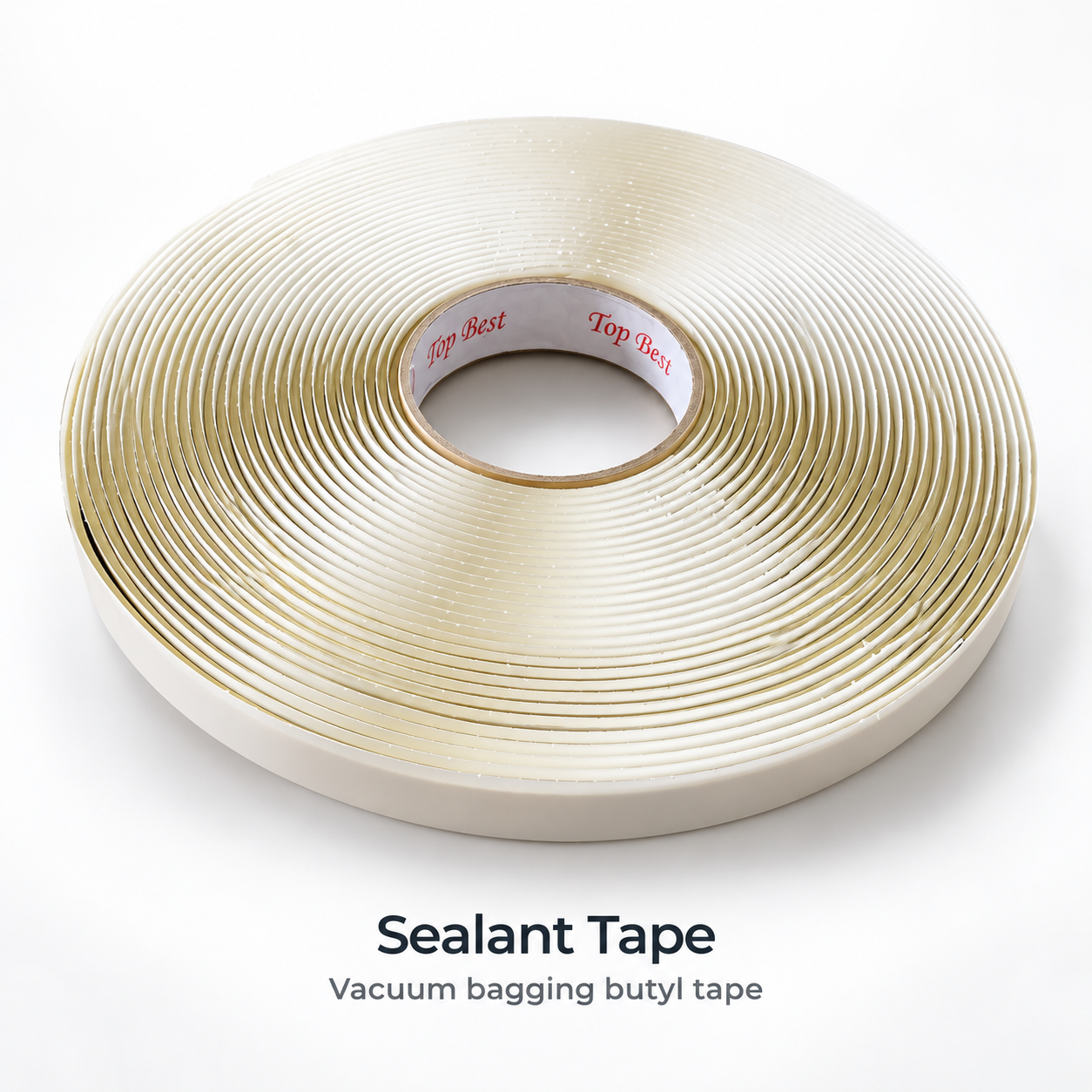
Sealant tape is a small consumable with a direct impact on leak rate. Tooling surfaces should be clean, dry and compatible with the selected tape.
Key points
- Seals vacuum bagging film
- Supports vacuum integrity
- For bagging and infusion
- Forms a continuous seal line
- Select by temperature/process
- Leak troubleshooting support
Application
- Clean and dry the mold flange; dust, oil or excess release reduces adhesion and causes leaks.
- Apply the tape continuously around the perimeter and press down; keep the liner on until bagging.
- Build pleats with vertical tape strips at corners and changes in geometry so the bag does not bridge.
- Leak test before infusing; leaks usually occur at tape joints and pleats.
Choosing the right grade
Choose tape by process temperature and mold material. Room-temperature tapes can soften when heated; for heated cures use a tape rated for that temperature.
Technical note
Specifications and use procedures should be checked against the current TDS/SDS and validated under actual production conditions before full implementation.
Application information
Product position
Sealant tape for vacuum bags
Typical use
Creates the seal between bagging film and mold surface in vacuum bagging and infusion.
Technical confirmation
The surface must be clean and dry; tack, service temperature and removability must suit the mold and cure cycle.