
Product Overview
Built for practical production needs
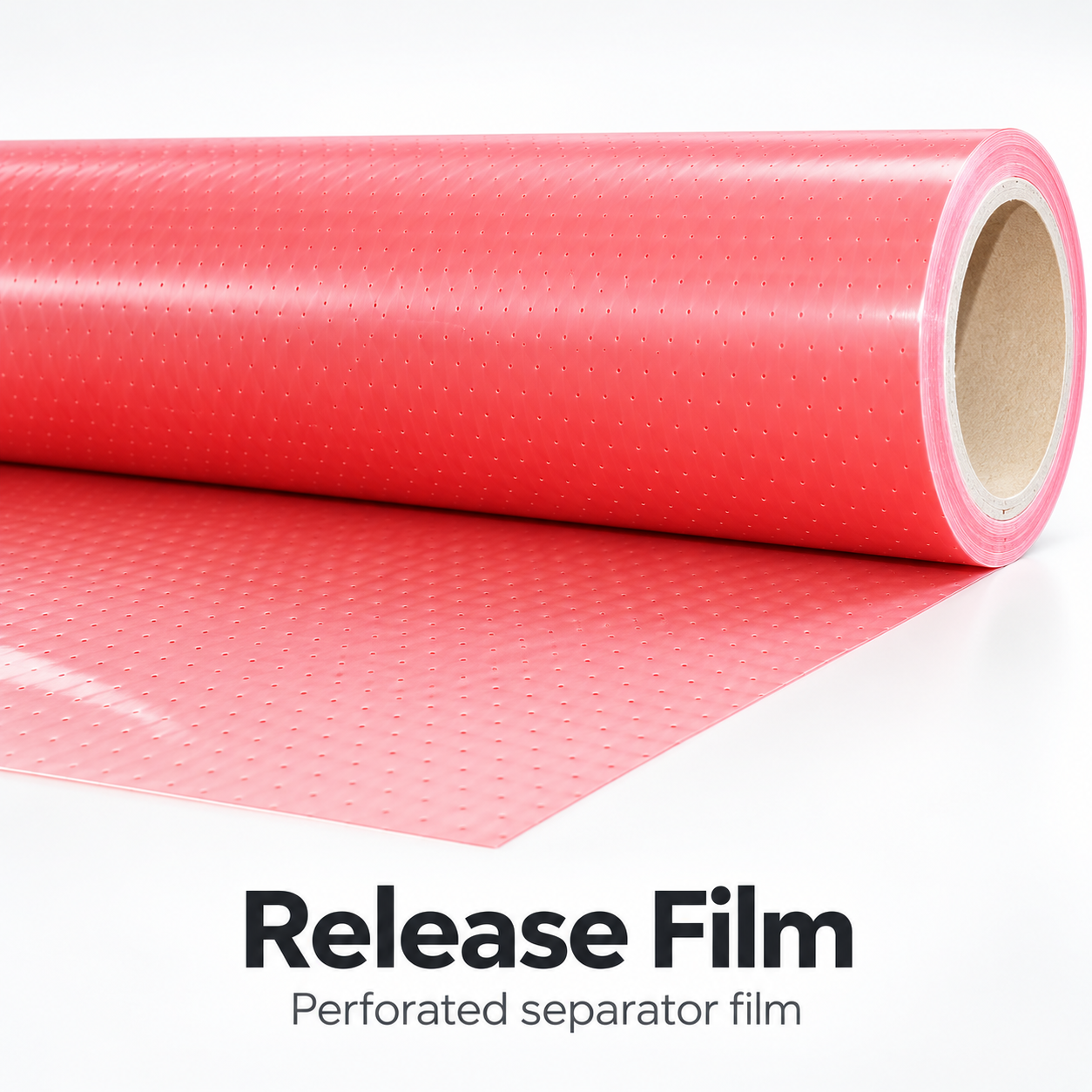
Release film is selected based on desired resin/air transfer, temperature and process. Perforated and non-perforated types serve different functions in the bagging stack.
Key points
- Separation layer in bagging stack
- Perforated/non-perforated options
- Supports resin-bleed control
- Used with suitable breather/bleeder
- Selected by process temperature
- Consumable-stack design support
Choosing the film
- Non-perforated: blocks resin flow; use to keep all resin in the laminate or as a top barrier layer.
- Perforated: lets air and some excess resin pass to the breather; hole pattern controls resin bleed.
- Temperature: choose a film rated for the cure temperature of the process.
Position in the stack
Typical stack from the mold surface: laminate, peel ply, release film or infusion mesh, breather, then vacuum bagging film sealed with sealant tape.
Technical note
Specifications and use procedures should be checked against the current TDS/SDS and validated under actual production conditions before full implementation.
Application information
Product position
Release layer between laminate and absorbent stack
Typical use
Controls the surface and prevents breather or bleeder from bonding directly to the cured laminate.
Technical confirmation
Perforation type, hole density, temperature rating and resin compatibility govern air and resin transfer.