
1. Start with the purge objective
Before selecting a product, define what the purge is expected to accomplish. Color change, material change, carbon removal and shutdown do not require the same level of cleanliness or the same operating sequence. Without a clear objective, it is difficult to judge whether the selected purge grade is actually suitable.
The first question should therefore not be “how much purging compound should we use?” but “what needs to be removed and what cleanliness level is acceptable before the next run?”
2. Identify the previous and next polymer
Purging effectiveness is closely related to the material currently inside the machine and the material that will run next. During a color or polymer change, both sides of the transition matter rather than only the resin being processed at that moment.
Knowing the previous and next polymer helps narrow the purge-grade selection and supports a more repeatable changeover procedure.
3. Check the operating temperature window
The purging compound must operate within a temperature range that is compatible with both the polymer and the machine. If the actual process conditions fall outside the suitable window for the selected grade, the purge may not perform as expected and can introduce another source of variability.
Temperature should therefore be treated as a primary selection criterion. When evaluating a new purge grade, compare the real machine temperature range with the current manufacturer guidance before implementation.
4. Machine design also affects purge performance
The same polymer can produce different purge results on different equipment. Barrel, screw, hot runner and other material-holding zones in the system all influence how effectively residue can be removed. A procedure that works on one machine should not automatically be copied to another without verification.
For technical support, useful information includes machine type, system configuration, previous and next polymer, operating temperature and the specific cleaning issue.
5. Standardize purge quantity and operating conditions
To evaluate a purging compound properly, record at least the purge quantity, time, rpm, back pressure and the result after purging. If operating conditions vary from one trial to the next, it becomes difficult to determine whether any improvement came from the purge grade or simply from a different procedure.
The goal is to build a repeatable SOP for each common situation, such as color change, material change, shutdown or carbon-removal work.
6. Judge performance by the result, not only by kilograms used
A purging compound should not be evaluated only by the amount consumed. Consider the cleanliness achieved, the time required, repeatability between operators or shifts, and the stability of the next material start-up.
If purge quantity keeps increasing while results remain inconsistent, review the grade, temperature, previous and next polymer, and machine configuration before simply adding more material.
Purging Compound selection checklist
- Define the objective: color change, polymer change, carbon removal or shutdown.
- Record the current polymer and the next polymer.
- Confirm the actual machine operating temperature.
- Identify the machine and the zones to be cleaned, such as barrel, screw or hot runner.
- Select the grade using current manufacturer technical data.
- Standardize purge quantity, time, rpm and back pressure.
- Record the result and build a repeatable SOP.
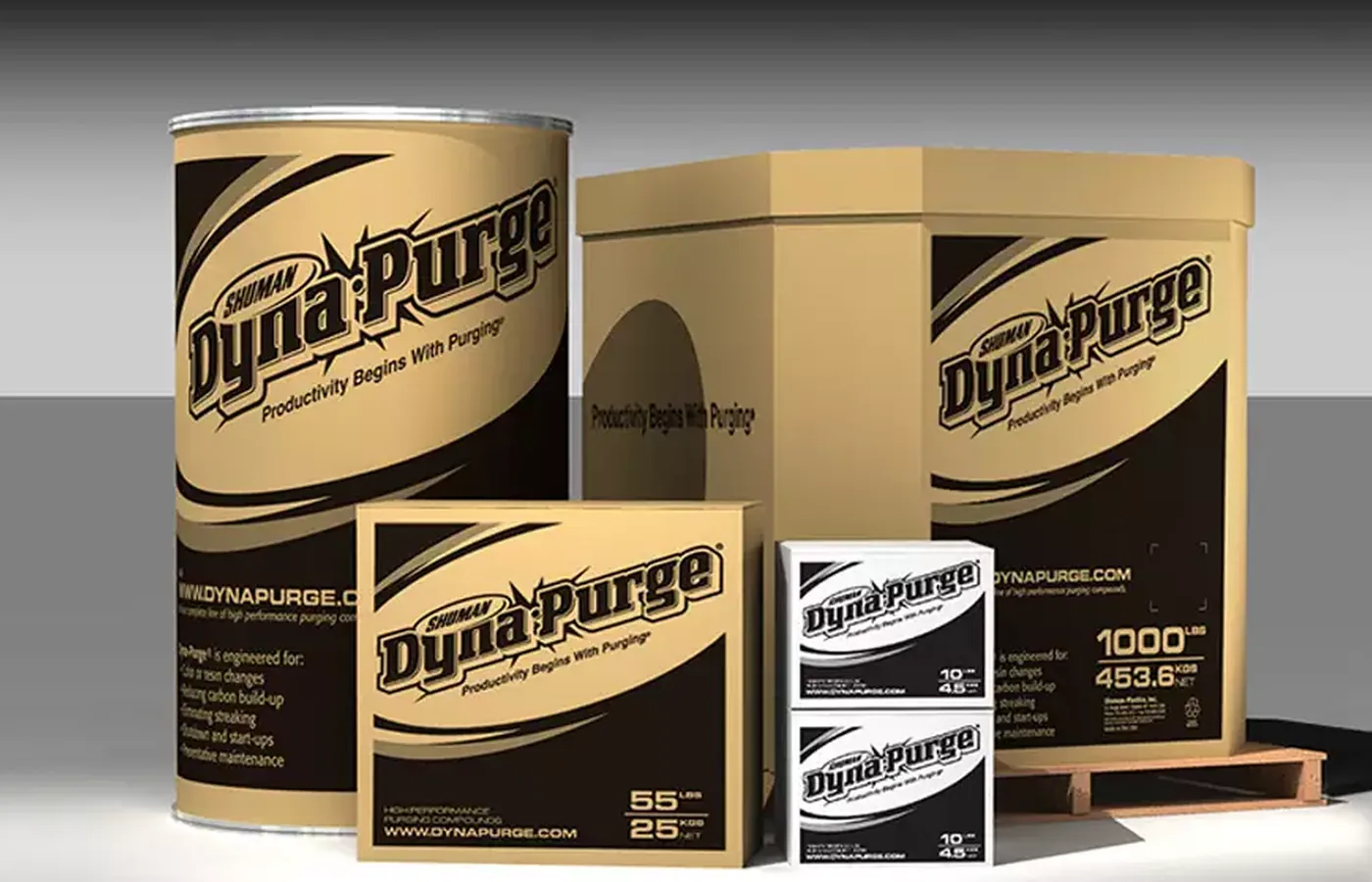
Dyna-Purge products on GKFRP
GKFRP provides individual Dyna-Purge product pages for grade-level reference. Grade selection should not be based on the product name alone; polymer, temperature and actual machine conditions still need to be checked before use.