
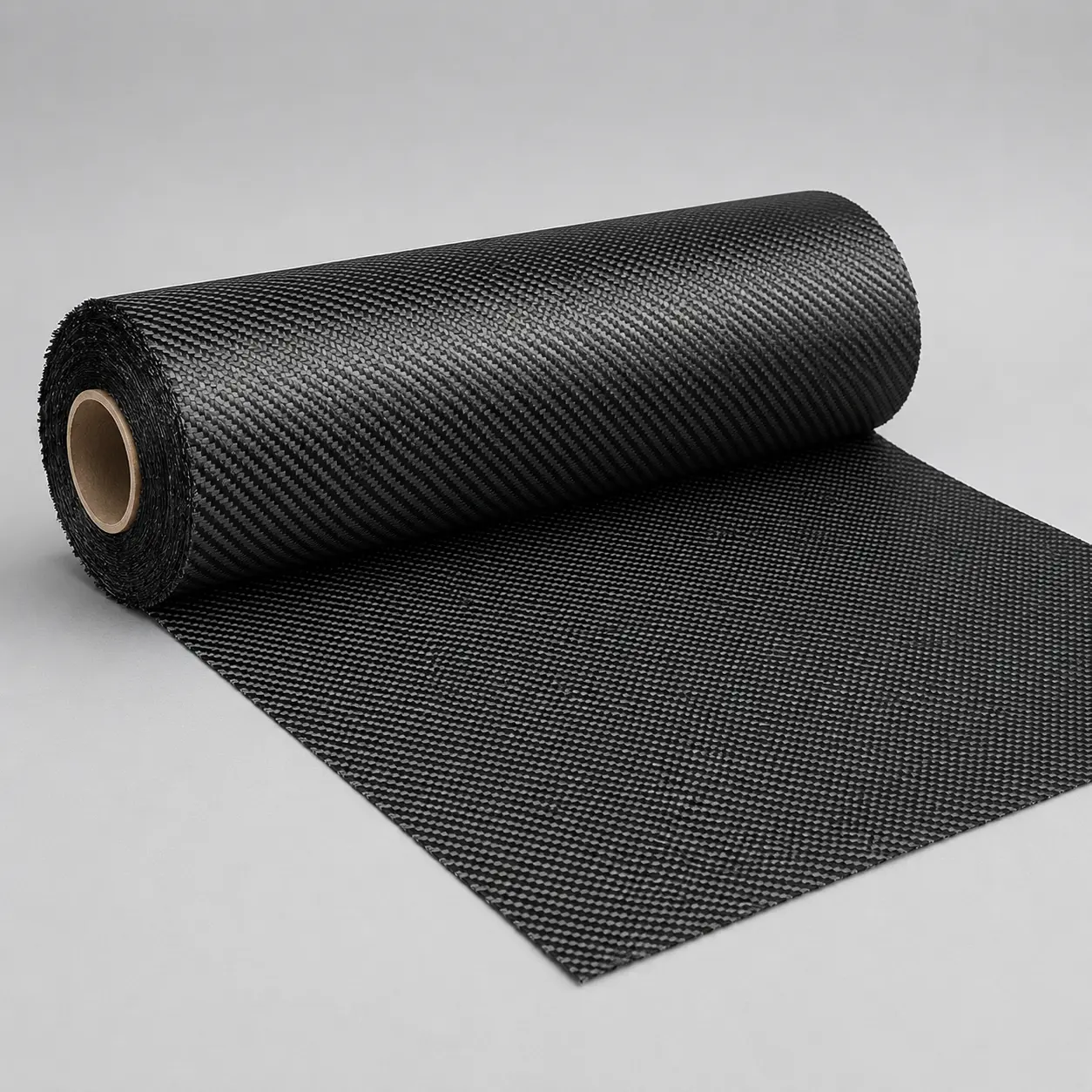
Built for practical production needs
Twill construction can improve drape over curved geometry compared with stiffer weave structures. Resin system, laminate stack-up and surface requirements should be confirmed before production.
Key points
- 3K twill weave
- Good drape on shaped surfaces
- Classic carbon appearance
- Suitable for lightweight structures
- Laminate selection support
- Application-based sample trial
Handling and lay-up
- Cut on a clean table with sharp shears; tape the cut line to stop the edge fraying.
- Keep the fabric dry and clean, free of oil, dust and skin contact; wear gloves.
- Place plies in the fiber orientation of the lay-up design and avoid stretching, which distorts the weave.
- Wet out evenly and consolidate with light rolling or with vacuum bagging or infusion to control resin content and voids.
When to choose 240 gsm twill
Twill drapes better than plain weave, so it follows curves and radii while giving the classic carbon pattern. At 240 gsm it is heavier than 200 gsm and builds thickness with fewer plies. Suited to cosmetic outer plies, shells, covers and lightweight structures.
Compatible resins
Carbon fabrics are normally used with epoxy to realize their mechanical performance and fiber–matrix adhesion. Polyester and vinyl ester can be used for some cosmetic or secondary parts, but adhesion and properties should be tested. When carbon is in contact with aluminum or steel in wet environments, use an isolation layer to prevent galvanic corrosion.
Specifications and use procedures should be checked against the current TDS/SDS and validated under actual production conditions before full implementation.