
What is spray-up
The spray gun delivers catalyzed resin while a chopper mounted on the gun cuts continuous roving into short lengths and sprays it with the resin stream onto a gelcoated mold. Each layer is then rolled to wet out the fiber and remove air. Spray-up suits large, open-mold parts that need one finished side, such as small boat hulls, tanks, bathtubs, panels and equipment housings.
Match roving to chopper and resin
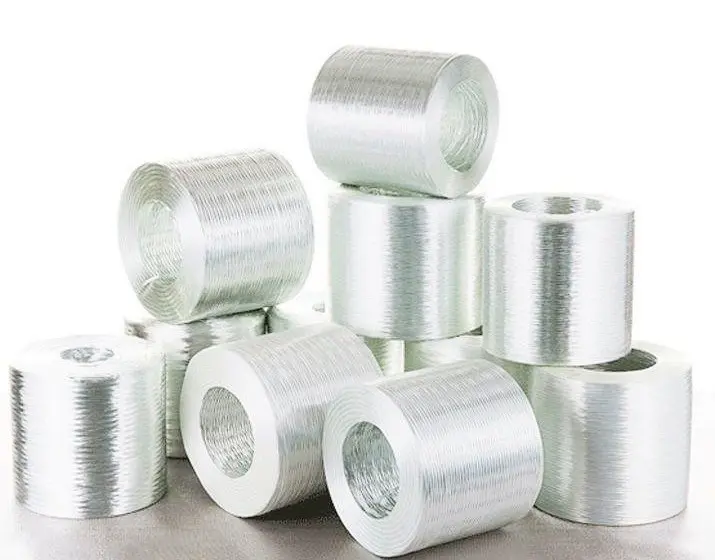
Spray-up roving is an assembled roving designed to chop cleanly, split evenly into small strands and wet out quickly. Sizing, tex and choppability directly affect fiber dispersion and wet-out. Do not substitute filament-winding or pultrusion roving, which usually chops poorly and wets out slowly under spray conditions.
Control the fiber–resin ratio
Calibrate resin flow and chopper output at the start of each shift by spraying a sample onto a test sheet and weighing fiber and resin. Gun distance, travel speed and spray pattern determine uniformity and laminate weight. Overlap passes evenly; take the target glass content from the part design and the resin TDS.
Consolidate at the right time
Roll each sprayed layer immediately, while the resin still has working time. The roller removes air and stabilizes thickness, but excessive pressure can drag fiber out of position, especially on vertical faces. Do not spray one layer too thick, as air at the bottom of the layer is hard to remove.
Common defects
- Dry fiber, white areas: local resin starvation or insufficient rolling.
- Resin-rich areas: high resin ratio, heavier and more brittle laminate.
- Voids: layer too thick, insufficient rolling, or rolling after gel.
- Uneven thickness: inconsistent gun speed and pass overlap.
- Fiber print-through on gelcoat: first ply too coarse or laid up too fast; consider a thin skin coat behind the gelcoat.
Safety
Spray-up generates styrene vapor and fiber dust. The spray area needs ventilation, personal protective equipment, ignition-source control and compliance with the SDS of the resin and catalyst.