
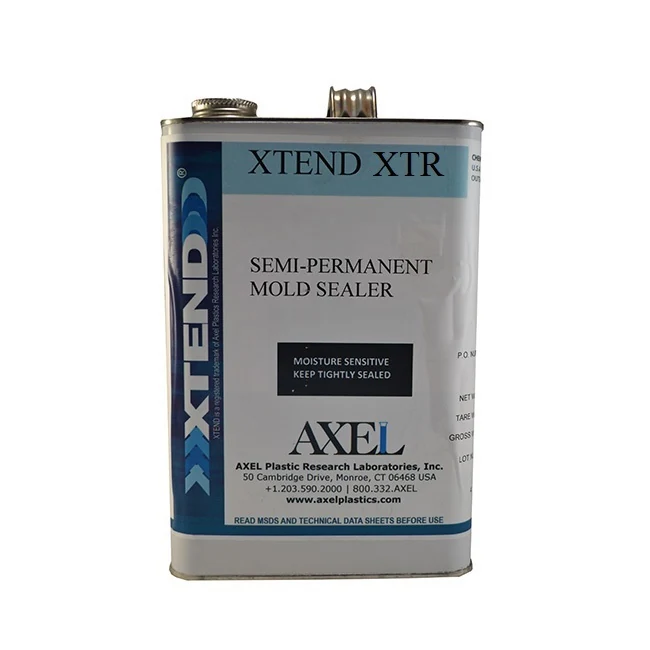
Seal the mold before applying release
XTEND XTR is a solvent-based siloxane-modified resin solution. Once the solvent evaporates, the coating cures into a film on the mold surface that adds mold protection and enhances release performance. XTR is compatible with most semi-permanent mold releases, such as XTEND 818+.
When to use it
- New or recently compounded FRP molds
- Mold repair areas
- Porous molds or porous repairs
- FRP and metal tooling
Typical properties
Limitations
- Apply at ambient temperature, ideally above 18°C (65°F).
- Do not use on heated molds above 177°C (350°F).
- Do not dilute.
Mold preparation
Mold surfaces must be clean and free of previously used sacrificial releases (paste waxes, fluoropolymer releases, etc.) and other contaminants such as dust, dirt, polishes and polishing or compounding residue. Total stripping is generally not required on molds running semi-permanent release. New molds, porous molds and porous repairs may need one or more additional coats.
Application
- Apply to ambient-temperature molds with a clean woven paper cloth (shop towel) or a heavy-duty plain white paper towel.
- Work in patches about 4–6 ft (1.2–1.8 m) square, or a size you can wipe before it dries. Apply a smooth, continuous light film that looks just evenly wet – no puddles or drips. Do not over-apply.
- As the sealer starts to flash off (about 30 seconds – 1 minute), wipe with a clean, dry paper cloth in a circular motion with light to medium pressure. The goal is to even out the surface, not to dry or polish it.
- When the remaining sealer is almost dry (about 30 seconds – 2 minutes), polish with a soft cotton cloth.
- Apply 2 coats, about 15–20 minutes apart, by wiping or spraying.
- Let the mold stand at least 30 minutes at room temperature before applying release.
Optimum polishing time depends on temperature and humidity. Polishing is easiest while the sealer is still slightly wet; if it is difficult or leaves more streaks, you are polishing too soon – wait a bit longer and polish again. If streaks remain after dry polishing the whole surface, wipe the area vigorously with a cloth wet with sealer, immediately wipe dry, then dry polish.
Curing in cold or humid conditions
Below 15°C (60°F), or in cool conditions with very high humidity, allow longer between coats and after the final coat. Good cure is also important on new molds, with long-cure molding resins and over repaired areas.
Removing XTR
XTR can be removed by abrading (polishing) or chemically with CX-200HS Stripper or WCX water-based stripper.
Storage
Moisture sensitive: keep tightly closed, minimize air exposure and do not return exposed material to the can, and do not dilute. Store above freezing and below 38°C (100°F). Decant into a clean HDPE bottle with a shampoo-style squeeze cap to limit air exposure; drum users should fit a desiccant drier.
Frequently asked questions
What is XTEND XTR used for?
It is a mold sealer for FRP and metal tooling that adds mold protection and enhances release performance, especially on new or recently compounded FRP molds and repair areas.
How many coats of XTR are needed?
Apply 2 coats about 15–20 minutes apart, then wait at least 30 minutes before applying release. New or porous molds may need additional coats.
Which releases can be used over XTR?
XTR is compatible with most semi-permanent mold releases, such as XTEND 818+. Total stripping is generally not required before applying XTR.
Can XTR be used on heated molds?
Not on molds above 177°C (350°F).
How do I fix streaks after applying XTR?
Streaks usually mean polishing too soon. Wait and polish again; if they remain, wipe vigorously with a cloth wet with XTR, wipe dry immediately and dry polish.
How should XTR be stored?
Keep tightly closed as it is moisture sensitive; store above freezing and below 38°C. Shelf life is 12 months in the original unopened container.
Data on this page is taken from the AXEL Plastics XTEND XTR technical data sheet. Time between coats and polishing time depend on shop temperature and humidity.